curiosities · pillar-4-cultural-oddities
Why Japanese wear masks in spring — it's not COVID, it's a forestry policy from 1954
Japan's spring mask is not pandemic residue. It's a 38% national allergy that traces back to 1954, when the country reseeded its mountains in one species of tree.
You're in Kyoto in early April. The cherry blossoms are out, the temple paths are full, and a coachload of tourists has just spilled into Maruyama-kōen with phones up. Half of them are American or European, all maskless, several in sleeveless tops because the sun is out. Between them, threading through the same path, is everyone else: the Japanese visitors, the locals, the schoolkids on a class trip. A third of them, maybe more, are wearing surgical masks under the sakura. The tourists notice. You can almost see the question forming: Wait — is COVID back?
It isn't. The masks under the cherry trees aren't pandemic residue. They're a national allergy that grew out of a forestry program nobody could have predicted would do this, and the trees throwing the pollen are the very ones the country planted to rebuild itself.
The condition is called スギ花粉症 (sugi kafunshō), Japanese cedar pollinosis, and in 2019 the national rate hit 38.8% of the adult population — up from 16.2% in 1998 and 26.5% in 2008. Counted alongside the related cypress, ragweed, and grass allergies, roughly 42.5% of Japan now has hay fever of some form. The springtime mask in front of you is the most visible coping device, but the same person is also probably carrying eye drops, an antihistamine, and a half-empty box of tissues in their bag, all bought from the same convenience-store aisle the conbini keeps stocked from late February through May.
The trees throwing the pollen, Cryptomeria japonica (sugi, often translated "Japanese cedar" though it isn't a true cedar) and Chamaecyparis obtusa (hinoki, Japanese cypress), are now everywhere because of a postwar decision called 拡大造林 (kakudai zōrin, "expansion afforestation"). The Pacific War had stripped Japan's mountains for fuel and construction, then the rebuilding stripped what was left. From the late 1940s the government replanted at industrial scale and picked two species for it — sugi and hinoki — because both grow straight, grow fast, and produce premium structural timber. In 1954 alone, 394,522 hectares of mountain were reseeded. Annual replanted area stayed above 300,000 hectares through 1971. Mainland Japan was, with the patience of a policy that thought in decades, turned into a two-species monoculture covering roughly ten million hectares — about forty-four percent of all forest cover.
Sugi takes about twenty-five to thirty years to start producing pollen at scale. The clock started in the 1950s. The bill came due in the 1980s, the rate crossed ten percent of the population in the 1990s, and today it's nearly four in ten.
The piece foreign visitors usually miss is that you don't arrive immune. Cedar pollinosis isn't genetic — it's exposure-driven. Recent arrivals to Japan rarely react in their first spring. Year by year the body sensitizes, and after about a decade of living here, long-term foreign residents are affected at roughly the same rate as Japanese people. This is why the masked locals under the sakura look, to a visitor, like an unrelated population doing a baffling thing: the visitor's body is, statistically, on day one of a sensitization curve the locals are twenty years deep into.
Once you know the cause, the spring infrastructure becomes visible everywhere. Every evening news weather report ends with a 花粉飛散予報 (kafun hisan yohō, pollen-dispersion forecast) showing the next-day count in five icons, from "少ない" to "非常に多い"; the daily observation network now runs across private weather services (Weathernews, tenki.jp) and prefectural agencies — the Ministry of the Environment ran its own "Hanako" system from the mid-2000s but shut it down in 2021 after the private networks had surpassed it in coverage. The 100-yen shop puts up a dedicated spring rack of pollen-blocking masks, eye-rinse cups, and hana-megusuri. JR stations run drug-company campaigns at platform eye-level. The hinoki wave hits about three weeks after the sugi peak, so the season runs roughly mid-February through May, and the masks just stay on.
Three small ways to actually notice this when you're in Japan next spring.
Look up, in any city park, at the very tall, very straight evergreens lining the path. If they look like they belong to one species and they reach the same height, those are sugi or hinoki, and they were planted some time between 1947 and 1972 — most of them are now between fifty-five and eighty years old, well into pollen-producing maturity. The pollen drifting onto your jacket between mid-February and April is the visible output of a Diet committee that met when neither you nor most of the people coughing around you were born.
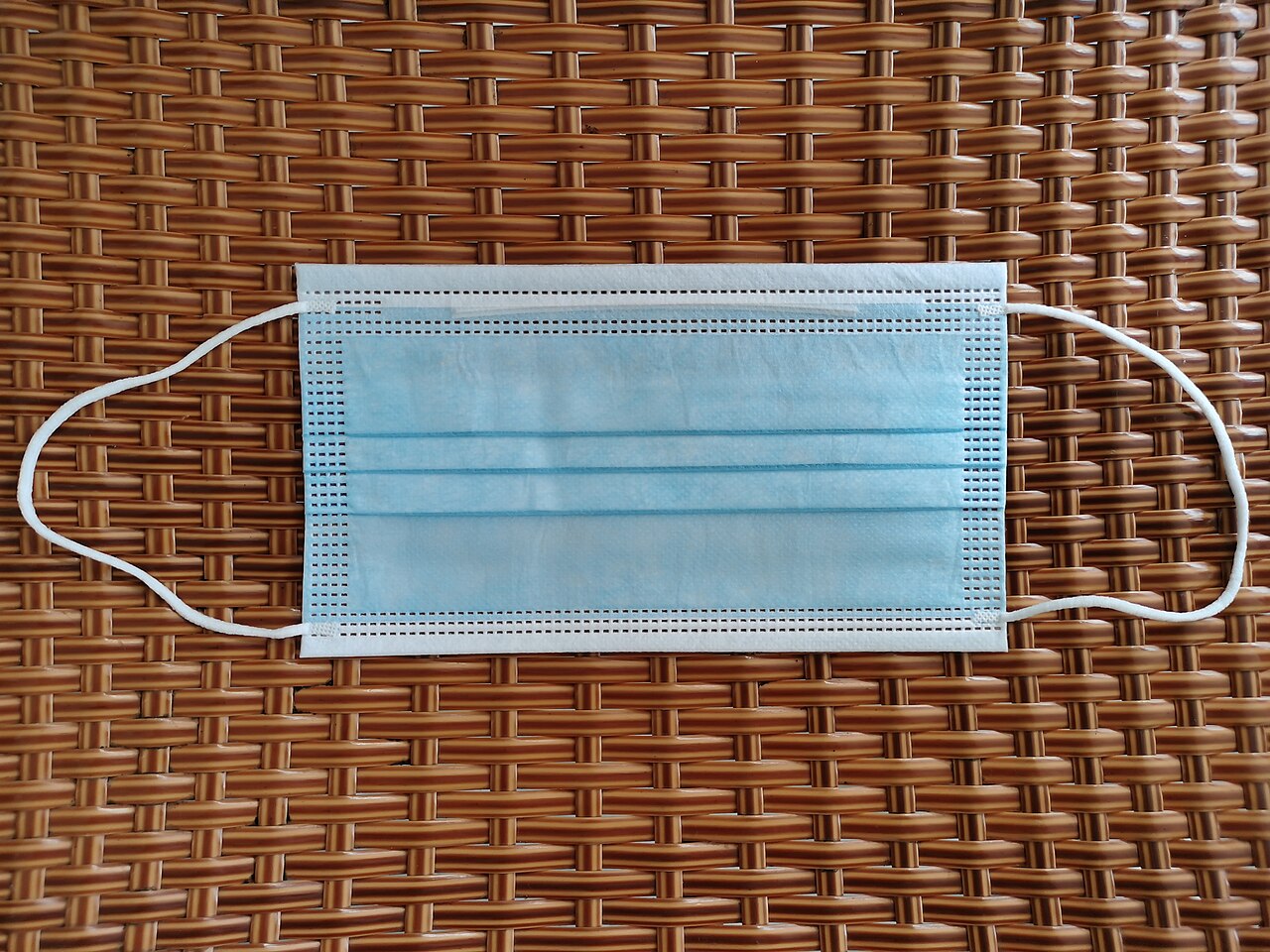
Walk into any 7-Eleven, Lawson, or FamilyMart in late March and stop at the seasonal endcap. The masks there are not the surgical-blue stockpile of pandemic memory. They are pleated, scented, anti-fog, marked "花粉" in red on the front of the box. Next to them: small bottles of saline eye-rinse, oral antihistamines, and tissue packs with moisturized layers. It's a complete kit. It's also, quietly, one of the largest seasonal retail categories the konbini networks run.
Watch the evening news around 18:50 on any major channel between February and May. The pollen forecast is a fixed slot. Five icons. Tomorrow's count by region. Then the weather. The national news network gives air time to airborne tree spores the same way other countries give it to UV indices.
The masks under the cherry trees aren't a leftover from 2020. They're a forestry decision from 1954, growing in stride with the trees themselves — and unless the country replants the mountains a third time in our lifetimes, the masks will still be there next April, and the April after.
Related reads
lifestyle
Japanese convenience stores — the civic infrastructure that just happens to sell sandwiches
Japan's convenience stores aren't really convenience stores — they're the country's everyday public infrastructure, awake at 3 AM, three minutes from anywhere.
lifestyle
Japanese trains — the rail system that runs to the second, in a country where on-time isn't a goal but a baseline
Japanese trains run to the second. The interesting part is what an entire society does on top of that assumption.
lifestyle
Gogatsubyō — Japan's 'May sickness' isn't laziness, it's a structural crash everyone schedules into their year
Around mid-May, Japanese people quietly tell each other they've got 'May sickness.' It's not weather. It's what happens when the country boots a new year in April and then takes a 10-day holiday a month later.
language
Oyaji-gyagu — the Japanese 'dad joke' that isn't actually trying to be funny
Looks like a failed pun. Actually a three-way meeting of social motive, age-related brain changes, and Japanese's unusual homophone supply — and the audience has more than one good move.
lifestyle
Washlet — the Japanese warm-water bidet that quietly became standard
Washlet is the warm-water bidet that washes you after — TOTO's invention, now near-universal on Japanese toilets.
Tags
Sources
- 斎藤洋三・堀口申作「栃木県日光地方におけるスギ花粉症 (Japanese Cedar Pollinosis)」, アレルギー誌 13(1-2), 1964 (J-Stage)
- 林野庁 拡大造林計画 records / 1966 林業基本計画
- Yamada T. et al., 'Present state of Japanese cedar pollinosis: the national affliction', J Allergy Clin Immunol 133(3), 2014
- 鼻アレルギー診療ガイドライン作成委員会 — 全国疫学調査 2008 / 2019
- 気象庁 / 環境省 花粉飛散予報 (annual public service since 1987 / 2003 respectively)
- Field observation, Kyoto / Nikko / Tokyo, March-April 2024-2026
Last reviewed: 2026-05-17
Spotted something off?
Reveal Japan aims for accuracy. If you found a factual error or unclear passage, tell us via Contact. We update articles when readers correct us, and we credit the corrector by request.
Affiliate disclosure: Some links on this page are affiliate links marked rel="sponsored nofollow". If you click and make a purchase, Reveal Japan may earn a commission at no extra cost to you. This does not influence which sources or explanations we choose to feature.