Decoded
Sushi — the Japanese dish where the rice is the work, not the fish
Sushi is rice, not fish. The 200-year-old hand-pressed nigiri form is built around *shari* — vinegared rice the chef has been adjusting for hours.
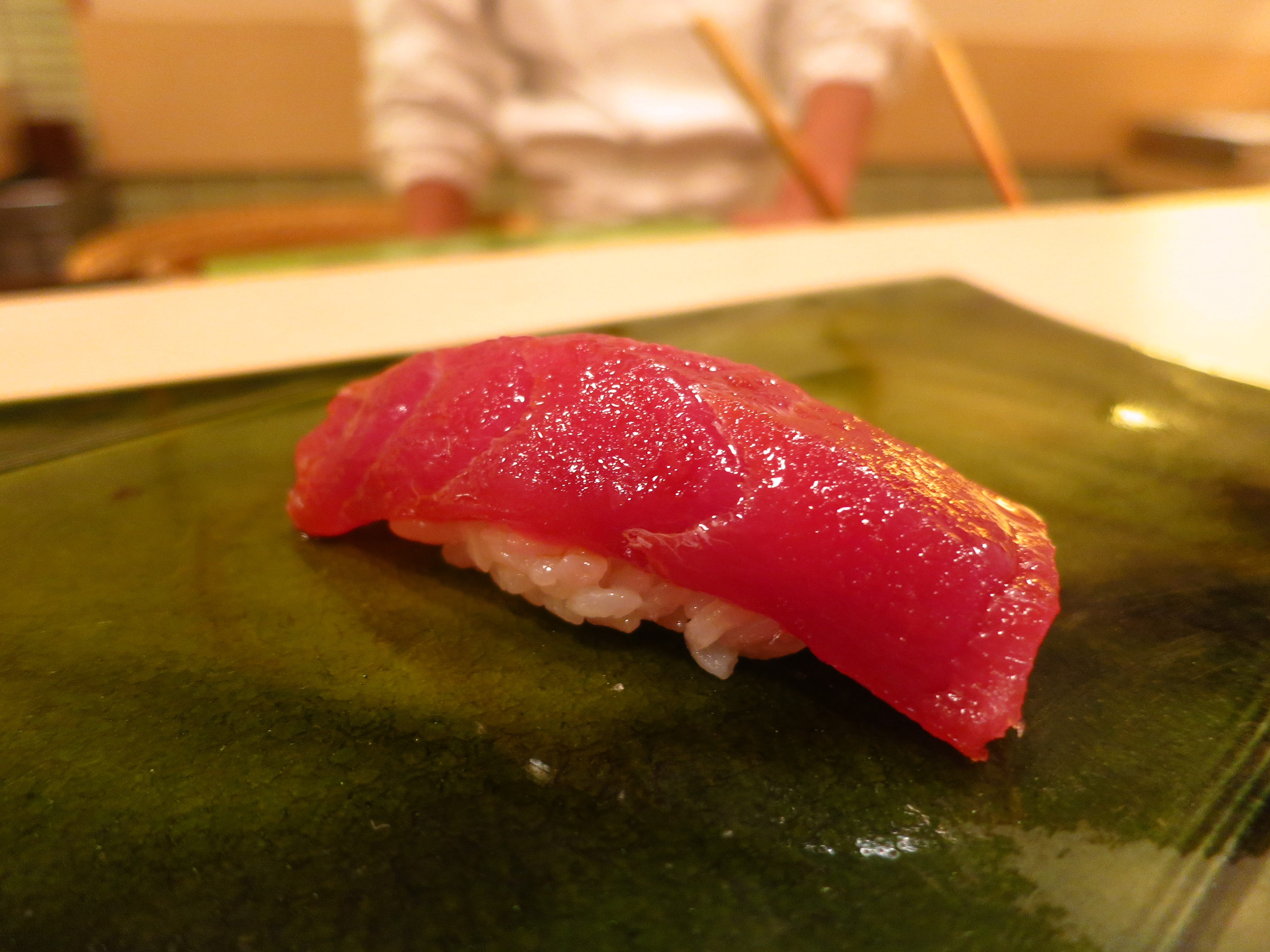
It's 7 PM at a ten-seat sushi-ya in Ginza. The cypress counter has been wiped to a clean grain pattern; the chef in a starched white jin-bei is standing in front of you with a wooden tub of rice behind his right hand. He scoops a portion of shari the size of a small egg, presses it once against his palm with practiced pressure, draws a thumb across the top to make a shallow channel, dabs a thin smear of wasabi into the channel, drapes a single slice of otoro across it, presses it briefly between his palm and fingertips, and sets it on the counter in front of you. Eat this within two minutes, he says. The rice is at body temperature. And then he starts the next one.
That's a Japanese 寿司 (sushi) counter. And the small mound of rice he just spent ten seconds shaping — the rice that everyone in the world thinks is the seat under the fish — is the part of the dish he's been making since he opened the shop this morning.
The rice the word points to
The word sushi (寿司・鮨) comes etymologically from the archaic Japanese adjective 酸し (sushi, "sour-tasting") — the same root as the modern suppai (酸っぱい, "sour"). The reference is to the rice. The seasoned, slightly sour vinegared rice. In its original etymology, sushi is a word for the rice — though modern Japanese diners, like everyone else, picture the fish first.
In modern Japanese use, sushi most often calls to mind a piece of nigiri — a small mound of vinegared rice with a single topping — because nigiri is the dominant form at a sushi-ya. But the family is broader than that:
- Nigiri (握り) — hand-pressed rice with a topping.
- Maki-zushi (巻き寿司) — rolled with nori.
- Chirashi-zushi (散らし寿司) — vinegared rice in a bowl with toppings scattered on top.
- Inari-zushi (稲荷寿司) — sweet fried tofu pouches stuffed with rice; no fish at all.
- Oshi-zushi, chakin-zushi, temari-zushi, mehari-zushi — pressed sushi from western Japan and various regional forms, all built on the same vinegared-rice base.
What unites them is not the seafood. It is the shari.
Why the rice is the work
Watch a chef on the customer side of a counter and you'll see the fish handling — the slicing, the brushing of nikiri soy, the placement. Watch the back-of-house preparation that happens before the shop opens, and the proportions invert. The rice is the morning-long job:
- The grain is chosen (often a specific aged variety the shop has worked with for years).
- Cooked slightly firmer than table rice, with less water.
- Seasoned with a mix of rice vinegar, salt, and sugar — proportions kept as a shop signature, rarely written down.
- Held in a hangiri, a shallow wooden tub, fanned by hand so the steam evaporates without the rice cooling all the way down.
- Brought to roughly body temperature by service time — not warm, not cold, the same temperature as the inside of the mouth.
When the nigiri is pressed, the chef compresses the grains just enough that the small mound holds its shape on the lacquer plate, but loose enough that it falls apart on the tongue. That tension — held together for the plate, falling apart in the mouth — is the trained motion of years. The fish on top, however good the fish is, is set against a moving target the chef has been adjusting since six in the morning. The chef's core skill is the rice, not the fish — that's what years of training are spent on.
How the modern form was shaped
Sushi did not start as nigiri. The earliest ancestors of the dish in Japan were 発酵寿司 (fermented sushi) — fish layered with cooked rice and left to ferment for months as a preservation method, with the rice discarded before eating. Funa-zushi from Shiga Prefecture is the surviving canonical example, and it tastes nothing like modern sushi (closer to a strong cheese).
By the early Edo period (17th century), faster forms had emerged — hayazushi (early sushi) — where vinegar replaced fermentation, and the rice was eaten with the fish. The rice and fish ratio shifted, and the dish moved out of the preservation register and into the meal register.
The form most foreign visitors picture, the hand-pressed nigiri, is generally credited to a single Edo chef: 華屋與兵衛 (Hanaya Yohei, 1799-1858), who refined and popularized it in Ryōgoku around 1824. The Edo Bay was full of small fish that could be eaten the day they were caught; Yohei built a fast-food version of sushi for working Edo townspeople — bite-sized, hand-pressed, eaten standing up at a stall, two pieces and gone. Nigiri started as street food. The Michelin-starred Ginza counter is a refinement of a 19th-century snack.
The international register the rest of the world inherited skipped most of this. The California Roll and its descendants — born in 1960s Los Angeles, a separate story — took the form into a different shape, where the rice was the structural medium and the filling did the work. In Japan, the rice still does the work.
Eat the rice next time
There are roughly three registers in which Japan eats sushi, and trying all three is the way to feel what the country actually means by the word.
-
An omakase counter, sitting in front of the chef. Eight to twelve seats, the chef in front of you, nigiri served piece by piece in an order the chef has decided based on what's good that morning. Sukiyabashi Jiro and Sushi Saito are the famous Tokyo names (¥30,000–¥40,000+ per person); the ¥8,000–¥15,000 neighborhood counter is where most Japanese sushi happens. Eat each piece in one bite, with the topping side touching the tongue first — the rice will register only after the fish, the way the chef built it. Most pieces already have wasabi inside; the chef may also pre-brush soy sauce on certain pieces, in which case eat as served rather than dipping.
-
A kaiten-zushi chain for the everyday register. Sushiro, Kura Sushi, Hama Sushi. Base plates from around ¥150. The conveyor belt is the country's family-meal version of sushi, and watching the kids order tamago and inari and the parents order saba and engawa is the everyday rhythm of the dish. Notice the rice. Even at chain price, the shari is at body temperature and lightly vinegared. The form holds.
-
A piece of futomaki or eho-maki at a Japanese friend's house, or at home. Thick rolls cut into substantial pieces, several ingredients inside, eaten with miso soup as a meal centerpiece — this is how rolled sushi happens in domestic Japanese life. Eho-maki in early February (節分 / Setsubun) is the seasonal home version: eaten whole, facing the year's lucky compass direction, in one go, in silence, for fortune.
The Western image of sushi is built around the topping. The chef's work is built around the rice — even if the diner's eye starts with the fish. Next time the chef sets a piece of nigiri in front of you, taste the shari first — the small mound that held the seat all this time — and the rest of the meal arranges itself.
Frequently asked questions
- What is sushi made of?
- Sushi is vinegared rice (*shari*) topped with or wrapped around a piece of fish, vegetable, or egg. The defining ingredient is the rice — the seafood is one possible topping among many. Many sushi pieces have no raw fish at all (cooked shrimp, simmered eel, sweet egg omelet, marinated tuna, fried tofu pouches).
- Is sushi always raw fish?
- No. The word sushi refers to the vinegared rice, not the topping. Toppings include cooked shrimp, simmered conger eel, sweet egg omelet, marinated mackerel, fried tofu pouches (*inari-zushi*), and many others without any raw fish. The Japanese sushi family is broader than the Western image suggests.
- What is shari?
- Shari (シャリ・舎利) is the vinegared rice that forms the base of every piece of sushi. The rice is seasoned with a mix of rice vinegar, salt, and sugar (the proportions vary by shop), and held at roughly body temperature when served. A sushi chef's main work is the shari — temperature, acidity, grain compression — not the fish slicing.
- When did nigiri sushi start?
- The hand-pressed *nigiri* form is generally credited to Hanaya Yohei (華屋與兵衛, 1799-1858), who refined and popularized it in Ryōgoku, Edo (now Tokyo) around 1824. It was a street-food snack — fast, eaten in two bites, with seafood from the nearby Edo Bay. The shape and the rough portion size of today's nigiri date from that period.
- What's the difference between sushi and sashimi?
- Sashimi is sliced raw fish served on its own, without rice. Sushi is the same fish (or any other topping) on or with vinegared rice. If there's no rice, it's sashimi; if there's rice, it's sushi.
Sources
- Trevor Corson, *The Story of Sushi* (HarperCollins, 2007)
- 大辞林 第四版 entries 寿司・鮨・鮓; archaic adjective 酸し (sour-tasting)
- Hanaya Yohei (華屋與兵衛, 1799-1858) — credited with codifying the modern hand-pressed nigiri form around 1824, Ryōgoku, Edo
- 東京すしアカデミー (Tokyo Sushi Academy) shari-training curriculum, public materials
Last reviewed: 2026-05-18
Related reads
Decoded
California Roll vs Sushi — what your local sushi place is actually serving you
The California Roll is an American invention from 1960s Los Angeles. The Japanese sushi (寿司) family it borrowed its name from is broader and built around vinegared rice in many forms.
Decoded
The green paste at your sushi isn't wasabi — it's dyed horseradish
The green dab on your sushi plate is, almost everywhere, dyed horseradish — not wasabi. Real wasabi is a different plant, grown in cold spring water, and tastes like a different flavor altogether.
Decoded
Hibachi — the American 'hibachi' restaurant has nothing to do with what 火鉢 means in Japan
An American 'Hibachi' dinner is a flat-grill steakhouse show. A Japanese 火鉢 is a small charcoal brazier in the corner of a room. Same name, completely different things — here's what each one actually is.
Decoded
Bonsai — the small potted tree at the garden center is not what's meant by 盆栽
The 'bonsai' at the garden center is its own thing — a small potted tree as houseplant. 盆栽 in Japan is a sculptural practice measured in decades. Both exist; they're not the same craft.
Spotted something off?
Reveal Japan aims for accuracy. If you found a factual error or unclear passage, tell us via Contact. We update articles when readers correct us, and we credit the corrector by request.