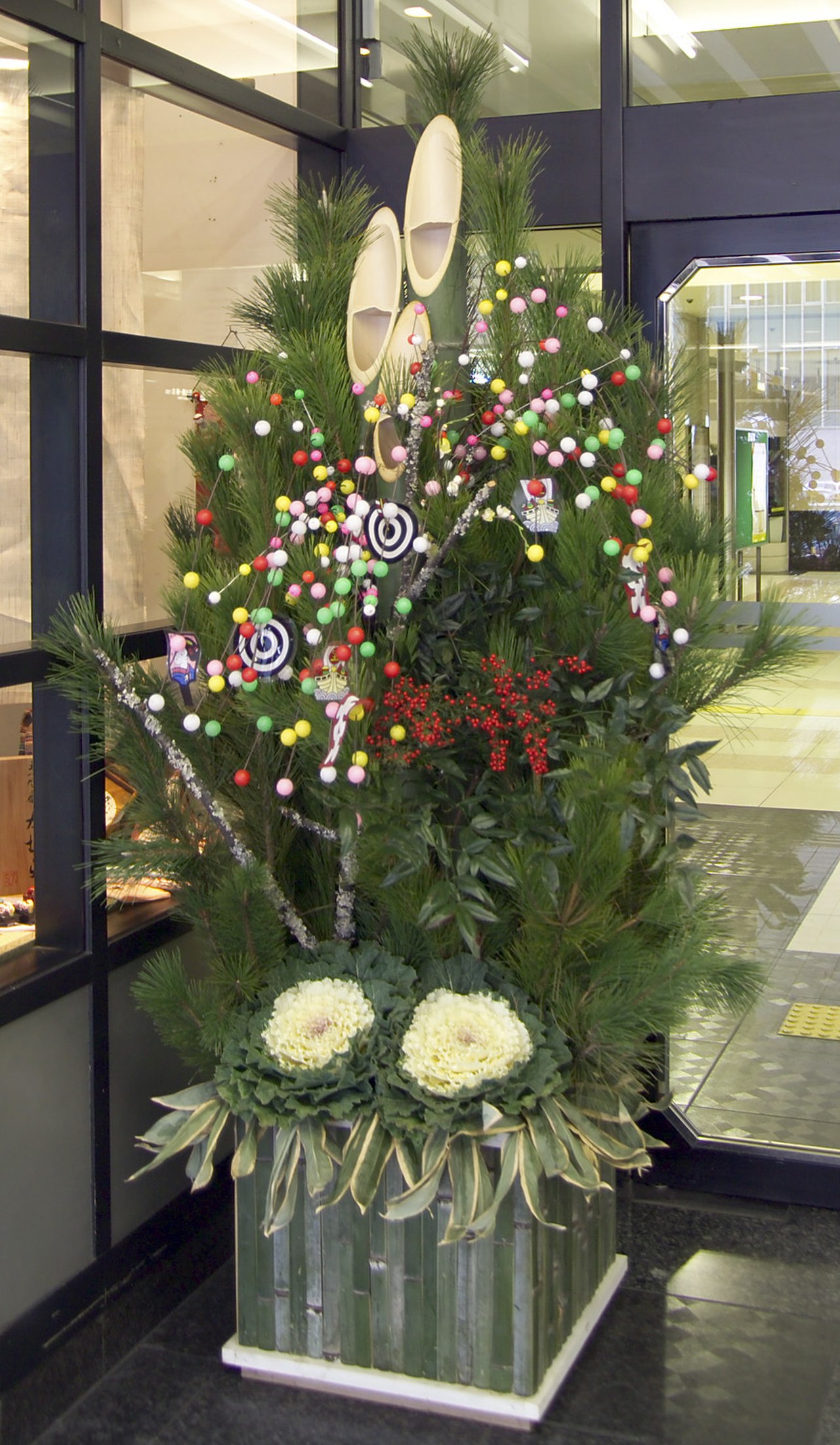
Shōgatsu — the Japanese New Year, when the entire country quietly resets in three days
The Japanese New Year isn't a party — it's three days of national stillness, family, and a specific lacquered box of food. Here's what happens.
It's just before midnight on December 31st in a quiet Japanese suburb. The TV is on with the famous Kōhaku music broadcast playing softly. Three generations of a family — grandparents, parents, two kids in pajamas — are sitting around a low table, eating the year's last bowl of toshikoshi soba (year-crossing buckwheat noodles). At midnight, the temple bell on the hill begins to ring 108 times, slowly, one strike for each human worldly desire. The kids count along until they fall asleep on the floor. The next morning, January 1st, the family wakes up, opens a black-lacquered three-tier box on the table — おせち (osechi) — and starts eating cold prepared foods chosen specifically because each one symbolizes something good: black beans for health, rolled herring eggs for fertility, sweet chestnut for fortune, sea bream for celebration. Later that morning, they put on warm coats and walk to the local shrine to pray for the year ahead, dropping a 5-yen coin in the offering box. Nothing is open. Almost no one is at work. The entire country is doing some version of exactly this. That's a Japanese お正月 (Shōgatsu). The annual three-day national stillness that resets the year.
In Japan, the New Year is structured as a long, quiet, family-anchored exhale — three days the country has agreed to spend differently.
The customs the whole country shares
Shōgatsu is the most important holiday of the Japanese calendar — more important than birthdays, more important than Christmas (which Japan does its own light version of, mostly as a couple's date night), more important than any other religious observance. The customs that the country shares are remarkably consistent:
- Year-end cleaning (ōsōji). In late December, every Japanese home gets a deep top-to-bottom cleaning. Windows washed, futons aired, kitchen scrubbed. The principle: you don't enter the new year carrying the dirt of the old one.
- December 31st, toshikoshi soba. A simple bowl of buckwheat noodles in broth, eaten in the evening or just before midnight. The long noodles symbolize a long thin life crossing into the new year.
- The midnight 108 bell strikes (joya no kane). Buddhist temples across the country ring 108 times at midnight, one strike for each of the 108 bonnō (worldly desires) said to bind humans. People watch on television or, in temple towns, walk to the temple to listen in person.
- January 1st morning, osechi ryōri. A black or red lacquered three-tier box prepared in advance (or, increasingly, ordered from a department store), containing twenty to thirty small cold dishes, each symbolizing a wish for the year. Every household has its own variations, but black beans, rolled omelet, fish roe, kombu, and sweet chestnut paste are nearly universal. Nothing is meant to be cooked on January 1st, so that the kitchen-keepers of the family also get to rest.
- 初詣 (hatsumōde) — first shrine visit. In the first one to three days of the year, tens of millions of people walk to their local shrine to pray for the year ahead. Major shrines (Meiji Jingū, Fushimi Inari) draw multi-hour queues. Small neighborhood shrines welcome the family that walks over after breakfast.
- お年玉 (otoshidama) — New Year money. Children receive small decorated envelopes with money inside from parents, grandparents, aunts, and uncles. Amounts vary by age (typically 1,000 to 10,000 yen each). For many Japanese kids, this is by far the biggest single pile of cash they get all year.
- Three days of stillness. Most shops, restaurants, and offices close from January 1st through January 3rd. Trains run on holiday schedules. Tokyo is unusually quiet. Many extended families travel back to their hometown — kisei rasshu, the New Year's homecoming rush — to spend these three days under one roof.
By January 4th, shops reopen, salarymen return to offices in their best suits and bow to colleagues with 「あけましておめでとうございます」. The country has, with remarkable coordination, taken three days off together.
The stillness is the point
The structure of Shōgatsu — clean the old year off, eat carefully prepared symbolic food, visit the shrine, sit with family, rest for three days — sits inside the same Japanese habit that shows up in hanami, in setsubun, in the seasonal wagashi: the country marks transitions with shared, quiet, often slow rituals that the entire population participates in at roughly the same moment. Shōgatsu is the largest of these. Hanami is the second largest. Setsubun is a smaller cousin.
What's particular about Shōgatsu is the stillness. Hanami is loud and group-driven; Setsubun is theatrical; Shōgatsu is mostly quiet. Even Tokyo gets quiet. That stillness itself is the year's reset button.
Lean into the closed days
If you can be in Japan from December 31 through January 3rd, don't try to sightsee — most things are closed. Instead, lean into the stillness. Eat toshikoshi soba on the night of the 31st. Listen to (or stream) the 108 bell strikes at midnight. Buy or order an osechi box from a depachika in late December. Walk to a neighborhood shrine on January 1st or 2nd for hatsumōde, drop a 5-yen coin, do ni-rei ni-hakushu ichi-rei. Notice that Tokyo at 11 AM on January 1st is unusually empty and unusually peaceful. And on the morning of January 4th, watch the first salarymen return to the trains in fresh suits, bowing to each other.
A national agreement to stop together for three days, to clean off the previous year, to eat something carefully prepared that says "fortune, health, fertility, celebration" — and then to start over together. No party. No countdown noise. Just a quiet country breathing out and breathing in.
Related reads
culture
Tsuyu — Japan's rainy season isn't bad weather to wait out, it's the month the country spends watching one flower change color
Japan's rainy season isn't a month to skip — it's the one season with its own flower, its own words for rain, and a little doll hung in the window to beg for sun.
culture
Hanami — the Japanese national ritual of sitting under temporarily-blooming trees, on purpose, with friends
Japan plans its early-April calendar around a flower that blooms for one week. The whole country gathers under it on purpose.
lifestyle
Gogatsubyō — Japan's 'May sickness' isn't laziness, it's a structural crash everyone schedules into their year
Around mid-May, Japanese people quietly tell each other they've got 'May sickness.' It's not weather. It's what happens when the country boots a new year in April and then takes a 10-day holiday a month later.
food
Sake — how to read the label, and what *daiginjo* actually means on a Japanese bottle
On a sake bottle, the smaller the number, the more rice was destroyed to make it. That's the premium signal.
lifestyle
Kotatsu — the Japanese low table with a heater under it that quietly redesigned the entire winter
A low table, a heater, a heavy blanket. The Japanese winter device that keeps the family warm — and gathered — in one square meter.
Tags
Last reviewed: 2026-04-27
Spotted something off?
Reveal Japan aims for accuracy. If you found a factual error or unclear passage, tell us via Contact. We update articles when readers correct us, and we credit the corrector by request.
Affiliate disclosure: Some links on this page are affiliate links marked rel="sponsored nofollow". If you click and make a purchase, Reveal Japan may earn a commission at no extra cost to you. This does not influence which sources or explanations we choose to feature.