Hanami — the Japanese national ritual of sitting under temporarily-blooming trees, on purpose, with friends
Japan plans its early-April calendar around a flower that blooms for one week. The whole country gathers under it on purpose.
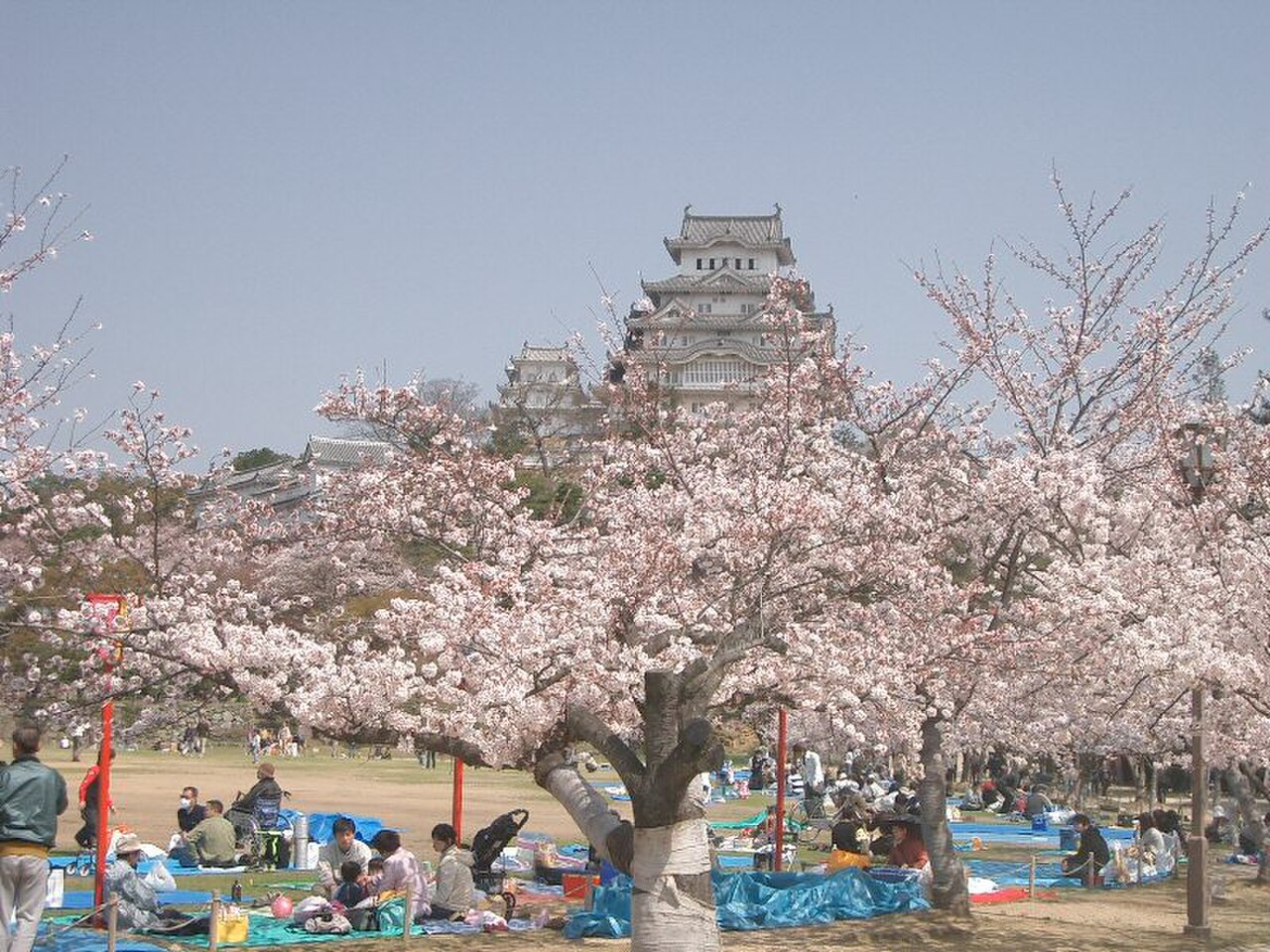
It's the first Saturday of April in Tokyo. You walk into Ueno Park around eleven in the morning and the entire ground beneath the cherry trees is already covered with neatly-aligned blue groundsheets (the iconic bright-blue plastic sheets sold at every 100-yen shop), edge to edge, like a giant patchwork quilt. Each groundsheet has its own group: coworkers, college clubs, families, three salarymen who arrived at 7 AM specifically to claim a spot for the rest of their team. There are coolers of beer, paper plates of sushi, sliced fruit, sakura mochi eaten under actual sakura. People sit cross-legged, take their shoes off at the edge of the groundsheet, lean back, and look up at a ceiling of pink-and-white petals against the spring sky. A breeze comes through and the petals fall slowly, one by one, into beer cups and lap blankets. Nobody seems to mind. Half the point of being here is that it falls. That's hanami — Japan's national ritual of sitting under cherry blossom trees, deliberately, with people you like, for the one or two weeks a year the trees are willing.
In Japan, hanami is what an entire country does about it.
A week of national flower-watching
A few things have to be true for hanami to work the way it does, and they're all in place every spring:
- The bloom is short. Sakura trees in any given city flower for roughly one week — a few more if it's cool, fewer if there's wind or rain. The Japanese phrase for full bloom is mankai; the phrase for the wave of falling petals is hanafubuki — "flower blizzard." The bloom is dramatic precisely because it's brief.
- The whole country tracks it. Starting in March, every weather broadcast on national television includes the 桜前線 (sakura zensen) — the cherry blossom front — a moving line that creeps north from Kyushu in mid-March to Hokkaido in early May, telling each region exactly when its trees will open. People plan trips around it. Hotels in Kyoto and Tokyo book out a year in advance for that particular week.
- People go physically sit under the trees. Every public park in any sakura zone fills up the moment the trees open. Big parks (Ueno, Shinjuku Gyoen, Yoyogi, Maruyama in Kyoto) become crowded with groundsheets in the day, then with strings of red paper lanterns at night for 夜桜 (yozakura, "night sakura") — the trees lit from below, the petals glowing pale.
- It's a group event, not a solo one. Coworkers go together as a team-bonding event. Families bring grandparents. Couples have their first date there. University clubs send a junior member at sunrise to "hold the spot" with a groundsheet, and the whole group arrives in time for the picnic.
- You eat and drink the season. Bento boxes are bought at department-store food halls specifically for hanami. The wagashi shop has sakura mochi in the window. Convenience stores roll out sakura-flavored snacks and pink-can beers. Even Starbucks runs a sakura latte for those weeks.
It's chaotic. It's also strangely tender — the kind of evening you remember. Each group has its own circle on its own sheet, but the whole park is doing the same thing at the same moment, under the same brief flowers.
Why a country built a national ritual around a one-week event
The thing the trees teach, every year, is the same thing: beauty is real, beauty is brief, and showing up matters. The Japanese aesthetic concept mono no aware — a gentle awareness of the impermanence of things — sits visibly inside hanami. The petals fall. The week ends. Next year another cohort of office workers will sit under the same tree and watch the next bloom. The fleetingness is not a problem. The fleetingness is the point.
That's also why hanami is a group event and not a solitary one. A flower you watch alone is just a flower. A flower you watch under, sitting on a groundsheet, with eight other people, sharing food, while petals drift into the beer — that becomes a memory you keep all year. And then the country does it again next April, in the same parks, with often the same people.
Find a groundsheet under a tree
Next time you can be in Japan in early April, plan your trip around the sakura zensen and physically sit under the trees. Don't just photograph them and walk past. Bring a groundsheet (or buy one at a 100-yen shop), pick up a bento and a few drinks at the depachika, find a spot in a park, and stay for two or three hours. Watch the petals fall. Walk through Ueno or Maruyama at night for the yozakura lanterns. Eat sakura mochi under actual sakura — the sweet that month asks for. And next time you see a cherry tree blooming somewhere outside Japan, you'll feel the absence of the picnic that should be under it.
You'll start to understand why a country built an annual collective ritual around a one-week flower: because once you've sat under the tree with people, the brief bloom stops being a sad thing about endings and starts being a small public celebration of the year being alive again.
Related reads
culture
Tsuyu — Japan's rainy season isn't bad weather to wait out, it's the month the country spends watching one flower change color
Japan's rainy season isn't a month to skip — it's the one season with its own flower, its own words for rain, and a little doll hung in the window to beg for sun.
culture
Shōgatsu — the Japanese New Year, when the entire country quietly resets in three days
The Japanese New Year isn't a party — it's three days of national stillness, family, and a specific lacquered box of food. Here's what happens.
lifestyle
Gogatsubyō — Japan's 'May sickness' isn't laziness, it's a structural crash everyone schedules into their year
Around mid-May, Japanese people quietly tell each other they've got 'May sickness.' It's not weather. It's what happens when the country boots a new year in April and then takes a 10-day holiday a month later.
food
Sake — how to read the label, and what *daiginjo* actually means on a Japanese bottle
On a sake bottle, the smaller the number, the more rice was destroyed to make it. That's the premium signal.
lifestyle
Kotatsu — the Japanese low table with a heater under it that quietly redesigned the entire winter
A low table, a heater, a heavy blanket. The Japanese winter device that keeps the family warm — and gathered — in one square meter.
Tags
Last reviewed: 2026-04-27
Spotted something off?
Reveal Japan aims for accuracy. If you found a factual error or unclear passage, tell us via Contact. We update articles when readers correct us, and we credit the corrector by request.
Affiliate disclosure: Some links on this page are affiliate links marked rel="sponsored nofollow". If you click and make a purchase, Reveal Japan may earn a commission at no extra cost to you. This does not influence which sources or explanations we choose to feature.