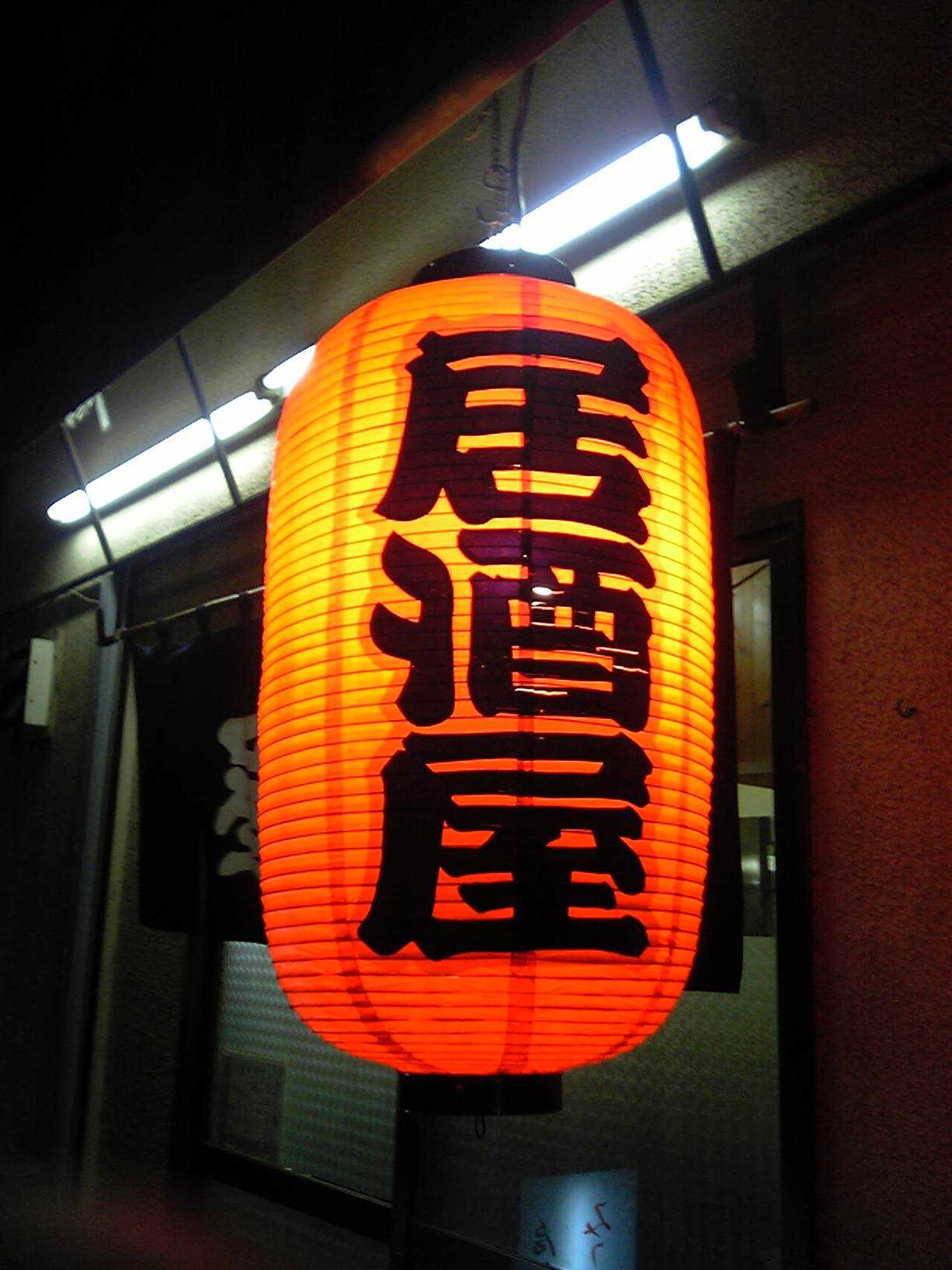
Izakaya — the Japanese place that isn't a bar, isn't a restaurant, and quietly does what neither does
Not a bar. Not a restaurant. The Japanese institution that quietly hosts most of the country's serious socializing.
A group of four salarymen step out of the rain, slide open a wooden door under a red paper lantern, and are greeted by a chorus of いらっしゃいませ from the staff. They sit down at a small wooden table tucked behind a curtain, peel apart cold oshibori hand towels, order four large draft beers, and clink glasses with a low otsukaresama desu. Two minutes later — without anyone ordering it — a small bowl of pickled vegetables appears at each seat. Forty minutes later, the table is covered with a dozen small plates: grilled chicken skewers, sashimi, edamame, fried karaage, a bowl of rice, a clay pot of stewed beef tendon. No one ordered that first small bowl. It's called otoshi — a small opening dish that comes with the table, charged a few hundred yen per person, somewhere between a couvert and an aperitif snack. That's an izakaya — the long, slow, small-plates evening that anchors most of Japan's serious socializing.
In Japan, the izakaya sits firmly in the middle and refuses to choose. It's neither. It's a third institution.
What an izakaya night is
An izakaya is a Japanese establishment where people drink, eat, and stay for a long time. Equal parts bar and small-plates kitchen. Equal weight on both halves of the word: 居 (to stay) + 酒 (sake/alcohol) + 屋 (shop). A shop where you stay with a drink. The defining moves of an izakaya evening are not the same as the defining moves of a Western dinner or a Western bar:
- You sit down at a table, not at a counter (though counter izakaya exist). Most groups are three to six people. You're going to be here a while.
- You get otoshi before you order anything. A small dish — pickled vegetables, simmered tofu, a tiny bit of seafood — arrives at each seat, typically charged a few hundred yen per person. It functions as a table charge that comes with a small piece of seasonal food. Some foreigners read it as scammy; long-term residents just see it as how izakaya work.
- You order in waves, not in courses. Three or four small plates first, then more as needed, then more, then a refill of drinks, then more food. Nobody is keeping track of "appetizer, main, dessert." The whole table picks at everything together for hours.
- Drinks come in any order you like. Beer, highball (whisky and soda), sake, shōchū — order whatever the table feels like next. Some izakaya offer nomihōdai (all-you-can-drink within a fixed time and price), but it varies a lot by shop and is not the default.
- You call the staff when you want to order — either by raising your hand and saying sumimasen across the room, or, in many izakaya, by pressing a small call button on the table. The whole thing is loud, casual, and not at all rushed.
- At the end of a long evening, the group moves on to a second venue: ni-jikai. Sometimes a third (san-jikai). Often a final stop at a 24-hour ramen shop, eaten at 2 AM as a kind of stomach landing strip.
It looks chaotic from outside. It is, in fact, very organized. The whole sequence is what serious socializing in Japan looks like.
Why izakaya is the third place
Most of the country's important social work happens at an izakaya. New colleagues get welcomed at one. Departing colleagues get sent off at one. Big projects get celebrated at one. Difficult conversations between a manager and a junior staff member often happen at one, because the izakaya is the room where Japanese people relax their formal register without anyone losing face. There's even a phrase for it — nomi-nication (drinking + communication) — to describe the kind of honest conversation that only really happens after the second beer at a wooden table covered in small plates.
A college club holds its end-of-year celebration at one. A wedding after-party ends up at one. The izakaya is the room where Japanese social life is allowed to take its time.
Find one with no English menu
Next time you're in Japan, don't grab a quick dinner alone — find an izakaya, sit down, order in waves. When the otoshi arrives, eat it; the small charge comes with the table. Order a few skewers, a sashimi plate, an edamame, and one weird thing you can't translate. Stay long enough that the conversation outlasts the food. If the night runs long, the group can move to a second place — and if it's late and you're walking home, a small ramen counter is a perfectly good ending.
A lot of important conversations in Japan happen over the third small plate of the evening.
Related reads
food
Ramen-ya — the Japanese 15-minute solo dining ritual that isn't really like eating pasta
A 15-minute solo ritual at a counter — Japanese ramen isn't really like eating pasta, and the slurping is required.
food
Onigiri — the Japanese rice ball that's been a portable meal since before Japan had restaurants
The Japanese rice ball — a thousand-year-old portable meal that lives in every convenience store, every lunchbox, and every Japanese childhood.
food
Kaiten-zushi — the Japanese conveyor-belt sushi that quietly turned the most expensive food in the country into family dinner
Japan's conveyor-belt sushi chains turn sushi into casual family dinner — touchscreen ordering, color-coded plate prices, and a long belt of small plates rolling past your seat.
food
Sake — how to read the label, and what *daiginjo* actually means on a Japanese bottle
On a sake bottle, the smaller the number, the more rice was destroyed to make it. That's the premium signal.
lifestyle
Ramen — the Chinese noodle that became Japan's bowl after 1945
Ramen was Chinese until 1945. The postwar reinvention turned a Chinese noodle dish into Japan's regional bowl — and the world's most exported one.
Tags
Last reviewed: 2026-04-27
Spotted something off?
Reveal Japan aims for accuracy. If you found a factual error or unclear passage, tell us via Contact. We update articles when readers correct us, and we credit the corrector by request.
Affiliate disclosure: Some links on this page are affiliate links marked rel="sponsored nofollow". If you click and make a purchase, Reveal Japan may earn a commission at no extra cost to you. This does not influence which sources or explanations we choose to feature.