Ramen-ya — the Japanese 15-minute solo dining ritual that isn't really like eating pasta
A 15-minute solo ritual at a counter — Japanese ramen isn't really like eating pasta, and the slurping is required.
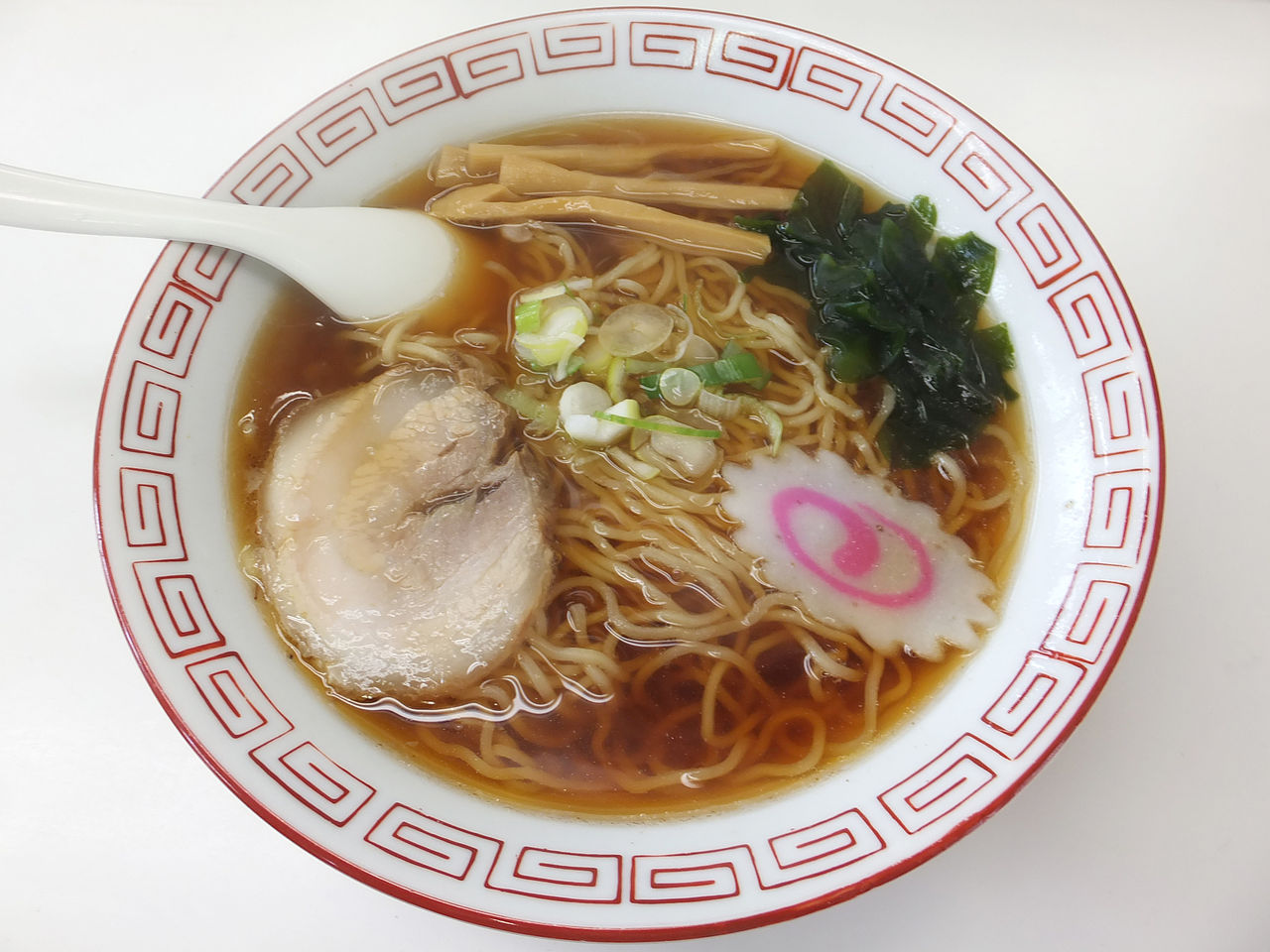
It's 9 PM on a Tuesday in a Japanese city. You step through the cloth curtain of a small shop tucked between two office buildings, and the smell hits you first: hours of pork bones, garlic, and soy reducing in a back kitchen. Inside there's a ticket-vending machine with photos of about twelve different bowls. You drop in 950 yen, press a single button, and a small printed slip drops out. You hand it to the cook behind the counter. You sit at the L-shaped wooden counter next to a salaryman who arrived a minute before you. Five minutes later a bowl is placed in front of you with a low omatase shimashita. Twelve minutes after that, you're outside on the sidewalk again, your stomach perfectly heavy. That's a ラーメン屋 (ramen-ya) — Japan's small, fast, single-bowl noodle shop, where one person, one counter seat, and one steaming bowl is the entire shape of a meal.
How a ramen-ya actually works
A ramen-ya is built around a single bowl of noodle soup that is the result of many, many hours of work happening in the back room. The customer-facing side of that work is compressed into a tight, almost silent sequence:
- You order at the door, not at the table. Most independent ramen shops have a shokken-ki (ticket vending machine) by the entrance. You select your bowl, your toppings, and your drink, you pay in cash, you receive small printed tickets. You sit down, you hand the tickets to the cook over the counter. No menu is studied at the table. No payment happens at the end.
- You sit at a counter, often alone. The seating is L-shaped or U-shaped wooden counters facing the kitchen. Most seats are single. Most diners are single. The shop assumes you came alone for one bowl.
- You slurp. Loudly. This is not bad manners; it is normal. The slurp pulls cool air across the noodles as they enter your mouth, which both cools them just enough to eat fast and aerates the broth on top.
- You can order kaedama (an extra portion of noodles, dropped into your remaining broth) at Hakata-style tonkotsu shops for about 150 yen. This is a Hakata convention — most non-tonkotsu shops don't offer kaedama, and asking for one in a shoyu or miso ramen shop in Tokyo will get a polite "no" and some embarrassment. Order kaedama only where it's on the menu.
- You finish in twelve to fifteen minutes, place your chopsticks on the counter, give a small nod to the cook, stand up, and leave. No bill, no tip, no conversation.
There are entire chains where the experience is even more compressed: a small individual booth around your seat, a privacy curtain that drops in front of you while you eat, a button to summon refills. The point is to remove every variable except you and the bowl.
Why eating alone is its own form
Japanese food is very capable of long, social, multi-hour meals — kaiseki, izakaya, family dinners, hot pot at home. But there's a parallel, equally serious tradition: meals built for one focused person, eaten quickly, alone. Ramen sits at the center of that second tradition. So does standing soba and udon at the train station, so does many small teishoku counters at lunch hour, so does most office-area lunch in Tokyo. Eating alone, fast, attentively — that's not a sad version of dining in Japan. It's its own respected form.
Ramen has visible regional styles. Hakata is thin straight noodles in a creamy white pork-bone broth; Sapporo is yellow miso with butter and corn against the snow outside. Beyond these signatures, individual shops in any city build their own house style — and the best move as a visitor is to eat the shop's recommended bowl wherever you happen to be.
Eat at a counter on a weekday night
Next time you're in Japan, eat at least one ramen-ya alone, at the counter, on a weekday night, at a shop with a ticket machine at the door — not a tourist chain. Order whatever the most-pressed button suggests. Sit down. Slurp loudly enough that you can hear the noodles. Eat in twelve minutes. Stand up, nod to the cook, walk out. Then do it again the next night in a different city — Hakata if you can get to Kyushu, Sapporo if you're up north, somewhere small in Tokyo. If you're in a Hakata-style tonkotsu shop and your broth is still warm when the noodles run low, order a kaedama.
For the postwar history behind why ramen became a Japanese dish in the first place — and the independent regional inventions that built today's style ladder — see Ramen — the Chinese noodle that became Japan's bowl after 1945.
Related reads
food
Onigiri — the Japanese rice ball that's been a portable meal since before Japan had restaurants
The Japanese rice ball — a thousand-year-old portable meal that lives in every convenience store, every lunchbox, and every Japanese childhood.
food
Kaiten-zushi — the Japanese conveyor-belt sushi that quietly turned the most expensive food in the country into family dinner
Japan's conveyor-belt sushi chains turn sushi into casual family dinner — touchscreen ordering, color-coded plate prices, and a long belt of small plates rolling past your seat.
food
Izakaya — the Japanese place that isn't a bar, isn't a restaurant, and quietly does what neither does
Not a bar. Not a restaurant. The Japanese institution that quietly hosts most of the country's serious socializing.
food
Sake — how to read the label, and what *daiginjo* actually means on a Japanese bottle
On a sake bottle, the smaller the number, the more rice was destroyed to make it. That's the premium signal.
lifestyle
Ramen — the Chinese noodle that became Japan's bowl after 1945
Ramen was Chinese until 1945. The postwar reinvention turned a Chinese noodle dish into Japan's regional bowl — and the world's most exported one.
Tags
Last reviewed: 2026-04-27
Spotted something off?
Reveal Japan aims for accuracy. If you found a factual error or unclear passage, tell us via Contact. We update articles when readers correct us, and we credit the corrector by request.
Affiliate disclosure: Some links on this page are affiliate links marked rel="sponsored nofollow". If you click and make a purchase, Reveal Japan may earn a commission at no extra cost to you. This does not influence which sources or explanations we choose to feature.